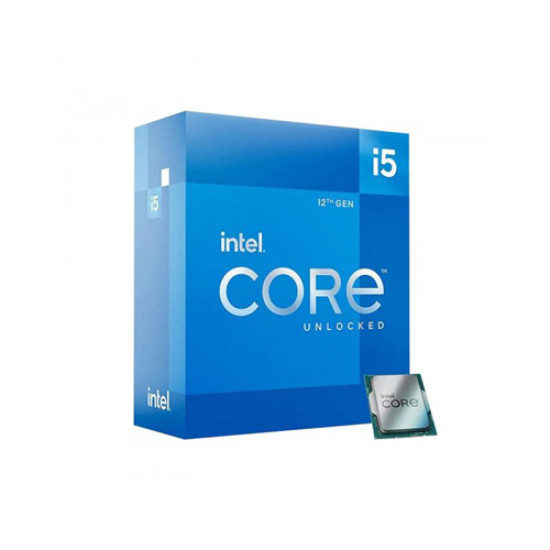
Intel 12th Gen Core i5-12400F Alder Lake Processor
The Intel 12th Gen Core i5 Processor is a powerful and efficient processor designed for high-performance computing. It features a base frequency of 2.50 GHz and a maximum turbo frequency of 4.40 GHz, allowing for smooth and seamless multitasking. With 6 cores and 12 threads, this processor is capable of handling even the most demanding workloads with ease.
The Intel 12th Gen Core i5 Processor boasts an impressive 18 MB cache, which helps to ensure fast and efficient data access. This cache is split between L1, L2, and L3 caches, with the L3 cache being the largest and most important for performance.
In terms of memory specifications, the Intel 12th Gen Core i5 Processor supports a maximum size of 256GB of DDR4 or DDR5 memory and can accommodate up to 2 memory channels. This allows for ample memory to be utilized for even the most complex applications.
The processor has a default TDP of 65W, which means that it is designed to be energy-efficient, while still providing high performance. Additionally, the processor is compatible with a wide range of motherboards, making it easy to integrate into a variety of systems.
The Intel 12th Gen Core i5 Processor also comes with a manufacturing warranty of 3 years, providing peace of mind for users. However, it is important to note that there is no warranty provided for the fan or cooler, so users should ensure that these components are of high quality to ensure proper cooling of the processor.
Overall, the Intel 12th Gen Core i5 Processor is an excellent choice for users who require a powerful and efficient processor for demanding workloads. Its high clock speed, impressive cache, and large memory capacity make it an ideal choice for applications such as gaming, content creation, and scientific computing.
Features
- High Clock Speed: With a base frequency of 2.50 GHz and a maximum turbo frequency of 4.40 GHz, the Intel 12th Gen Core i5 Processor is capable of handling even the most demanding workloads with ease.
- Efficient Multitasking: The processor features 6 cores and 12 threads, allowing for efficient multitasking and seamless performance.
- Large Cache: The processor boasts an impressive 18 MB cache, split between L1, L2, and L3 caches, which helps to ensure fast and efficient data access.
- Large Memory Capacity: The processor supports a maximum size of 256GB of DDR4 or DDR5 memory, and can accommodate up to 2 memory channels, providing ample memory for even the most complex applications.
- Energy Efficient: With a default TDP of 65W, the processor is designed to be energy-efficient, while still providing high performance.
- Broad Compatibility: The processor is compatible with a wide range of motherboards, making it easy to integrate into a variety of systems.
- 3-Year Warranty: The processor comes with a manufacturing warranty of 3 years, providing peace of mind for users.
- Integrated Graphics: The processor comes with Intel UHD Graphics, providing decent graphics performance for casual gaming and everyday use.
- PCIe 5.0 Support: The processor supports PCIe 5.0, providing faster data transfer rates and improved performance for PCIe devices.
- AI Acceleration: The processor features Intel's latest AI acceleration technologies, such as Intel Deep Learning Boost (DL Boost) and Intel Gaussian & Neural Accelerator (GNA), for improved performance in AI workloads